
Summer cooking often poses a dilemma: you want the smoky flavor of the grill, but you need the containment of a kitchen pan for delicate items like asparagus, shrimp, or cookies. This leads to the common question: “Can you put a baking sheet on the grill?”
The answer is yes, but it’s not as simple as tossing your favorite cookie sheet onto the grates. The intense heat of a grill behaves differently than your oven, and using the wrong equipment can ruin your pan—or worse, release harmful fumes into your food.
This guide explores the safety limits, the best materials to use, and the techniques required to turn your grill into a versatile outdoor oven.
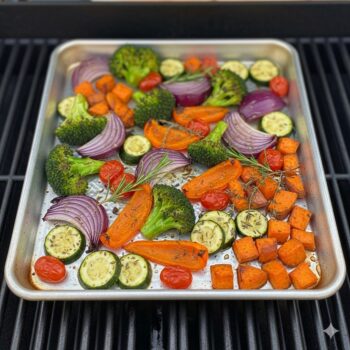
Is It Safe to Use a Baking Sheet on the Grill?
Using a baking sheet on the grill is generally safe, provided you understand the temperature limits and material properties of your cookware.
Temperature Limits
Gas and charcoal grills can reach temperatures far exceeding 600°F (315°C), whereas most home ovens top out at 500°F (260°C).
- Melting Points: Standard aluminum melts around 1,220°F, so your pan won’t turn into a puddle, but it can soften and warp significantly under direct flame.
- Coating Breakdown: The real danger lies in coatings. Nonstick surfaces can begin to degrade at temperatures as low as 500°F, releasing invisible, toxic fumes.
Types of Sheets That Work
To grill safely, you need a pan that can withstand thermal shock (rapid temperature changes) and high heat. Uncoated metals are the gold standard here. The goal is to use a sheet that conducts heat efficiently without reacting to the open flame.
Best Types of Baking Sheets for Grilling
Not all pans are created equal. Here is how the most common materials stack up when exposed to grill heat.
1. Aluminum (The Best Choice)
Heavy-duty, uncoated aluminum baking sheets (often called “half sheets” in commercial kitchens) are the top choice for grilling.
- Why it works: Aluminum is an incredible heat conductor, meaning it heats up fast and cooks food evenly.
- The Caveat: Thin aluminum pans from the dollar store will warp instantly. You need heavy-gauge metal (18-gauge or thicker) to withstand the rigors of the grill.
2. Stainless Steel (The Durable Choice)
If you are worried about warping or reacting with acidic foods (like tomatoes), stainless steel is the way to go.
- Why it works: It is tougher than aluminum and can handle higher heat without buckling.
- The Caveat: It is not a great heat conductor, so you may get hot spots. It is also notorious for sticking, so you will need to use plenty of oil.
3. Nonstick (Proceed with Caution)
- Pros: Easy cleanup and food release.
- Cons: High safety risk. Traditional nonstick (PTFE/Teflon) should generally be avoided on a grill unless you have precise temperature control (like a pellet grill set to 350°F).
- Warning: Never use nonstick pans over high heat or direct flames. Once the coating is compromised, the pan is ruined and the food is potentially contaminated.

How to Use a Baking Sheet on the Grill Safely
Turning your grill into an oven requires a specific setup to ensure your food cooks safely and your equipment survives.
Step-by-Step Guide
- Prep the Grill: Scrape your grates clean. Even though the pan covers them, debris can cause uneven heating or smoke.
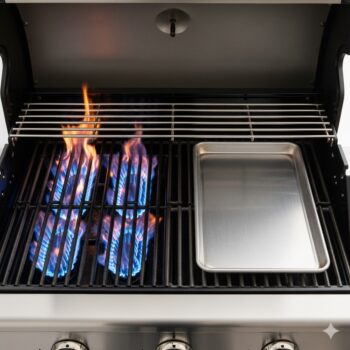
- Create Zones: Set up your grill for indirect heat. On a gas grill, light one side and leave the other off. On charcoal, bank the coals to one side.
- Place the Pan: Place your baking sheet on the unlit side of the grill (the cool zone).
- Close the Lid: This is crucial. You are relying on ambient heat to cook the food, just like an oven.
- Monitor Temp: Use a grill thermometer to maintain a steady temperature (usually between 375°F and 425°F).
Tips to Prevent Warping
“Warping” happens when metal expands unevenly due to rapid temperature changes.
- Avoid Direct Flame: Never place the sheet directly over a roaring fire. The intense heat on the bottom combined with cooler air on top causes the metal to buckle (creating that loud bang sound).
- Preheat Gradually: Put the pan on the grill as it heats up, rather than shocking a cold pan with maximum heat.
How to Avoid Flare-Ups
One of the biggest benefits of using a baking sheet is that it catches grease. However, if that grease pools and spills over, you have a massive fire hazard.
- Use Rimmed Sheets: Always use a “jelly roll” style pan with rolled edges to contain liquids.
- Don’t Overfill: Leave space for grease to render without overflowing.
What Foods Cook Best on a Baking Sheet Over a Grill
Using a sheet pan opens up culinary possibilities that standard grates can’t handle.
Vegetables
Small or thin vegetables like asparagus, cherry tomatoes, sliced peppers, and green beans are perfect. On standard grates, these often fall through into the fire. On a sheet pan, they roast beautifully while absorbing smoky flavor.
Shrimp and Scallops
Seafood is delicate. It sticks to grates and overcooks easily. A baking sheet allows you to cook shrimp in a garlic-butter sauce without losing a single piece to the flames.
Toasted Buns and Bread
You can toast a dozen burger buns at once on a sheet pan without worrying about the “hot spots” that burn bread in seconds on open grates.
Pizza and Cookies
Yes, you can bake on a grill! Using a sheet pan and indirect heat allows you to make sheet-pan pizza or even chocolate chip cookies during a camping trip or power outage.
Common Mistakes to Avoid
Even experienced grillers can make errors when introducing cookware to the mix.
1. Using Nonstick at High Heat
We cannot stress this enough: high heat ruins nonstick pans and releases toxic chemicals. If you are searing or grilling above 400°F, leave the nonstick inside.
2. Direct Flame Exposure
Treating a baking sheet like a frying pan is a mistake. The thin metal isn’t designed for the concentrated heat of a direct burner. This leads to scorched food bottoms and warped pans.
3. Putting Cold Pans on Hot Grills
Thermal shock is real. Taking a sheet pan out of the fridge (perhaps prepped with veggies) and throwing it onto a 500°F grill is a recipe for instant warping. Let the pan come to room temperature first.
Alternatives to Baking Sheets on a Grill
If you don’t want to risk your kitchen pans, consider these outdoor-specific alternatives.
Grill Mats
These are flexible, nonstick mats made of heat-resistant fabric (usually fiberglass coated with PTFE). They sit directly on the grates, preventing food from falling through while still leaving grill marks.
- Limit: Usually rated only up to 500°F.
Cast Iron Skillets or Griddles
The heavy-weight champion of outdoor cooking. Cast iron loves heat, never warps, and retains temperature better than any baking sheet.
- Best for: Searing meats or high-heat roasting.
Foil Packets
The ultimate disposable option. Wrap your veggies or fish in heavy-duty aluminum foil. It steams the food inside and requires zero cleanup.
Read More: How To Cook Loin Lamb Chops On An Electric Grill? Master Grilling Tips
Final Thoughts
Can you put a baking sheet on the grill? Absolutely. It is one of the best ways to cook delicate foods and keep your kitchen cool. Just remember the golden rule: Use heavy-duty aluminum, stick to indirect heat, and keep the nonstick pans in the cupboard.
By following these safety tips, you can turn your grill into a versatile second oven and master the art of outdoor baking.
FAQs
1. Can you put an aluminum baking sheet on the grill?
Yes, aluminum baking sheets can be used on a grill but should be placed over indirect heat to prevent warping or melting. Avoid direct flames.
2. Is it safe to put a nonstick baking sheet on a grill?
No. Most nonstick coatings begin breaking down around 500°F, and grills easily exceed that temperature. Stick to uncoated metal.
3. Will a baking sheet warp on a grill?
It can warp if exposed to sudden extreme heat or direct flame. Use indirect heat and preheat your grill gradually.
4. What foods can I cook on a baking sheet over a grill?
Vegetables, shrimp, fish, breakfast foods, garlic bread, pizza, and even snacks like nachos cook well using a sheet on a grill.
5. Should I use foil on a baking sheet on the grill?
Yes, lining your baking sheet with heavy-duty foil helps prevent sticking and simplifies cleanup, especially when cooking acidic or sugary foods.