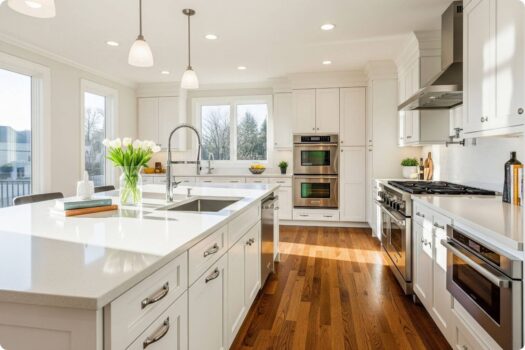
Planning a kitchen renovation can feel overwhelming, but the right Kitchen Remodel Guide makes the entire process easier and more achievable. Whether you want a modern upgrade, improved functionality, or a complete layout transformation, understanding the essential steps can save you time, money, and stress.
In this guide, we’ll walk you through budgeting, design planning, material selection, and smart renovation tips to help you create a kitchen that’s both beautiful and efficient. From choosing the right appliances to optimizing your space, you’ll find everything you need to confidently manage your kitchen remodel from start to finish.
Understanding the Importance of a Kitchen Remodel
Why Homeowners Remodel
The kitchen is no longer just for cooking; it is the hub of the home. Homeowners typically remodel for three reasons: outdated aesthetics, poor functionality (cramped layouts), or to increase resale value.
Financial, Functional, and Lifestyle Benefits
- Financial: A minor kitchen remodel has an average ROI of roughly 70–80%, making it a safer investment than most other home projects.
- Functional: Improving storage and workflow reduces daily stress.
- Lifestyle: Open-concept designs allow for better social interaction and entertainment.
Setting Clear Goals for Your Kitchen Remodel
Defining Your Purpose
Before swinging a hammer, ask: Who is this kitchen for?
- The Gourmet Chef: Needs commercial-grade appliances and massive prep space.
- The Busy Family: Needs durability, easy-to-clean surfaces, and a homework station.
- The Resale Flipper: Needs neutral colors and cost-effective updates.
Creating a Vision Board
Don’t just save random photos. Look for recurring themes in your saved images. Do you consistently pin white cabinets? Do you love industrial lighting? Use tools like Pinterest or Houzz to solidify your aesthetic before meeting a designer.
Determining Your Budget Effectively
The 5–15% Rule
A reliable industry standard is to spend between 5% and 15% of your home’s current value. If your home is worth $400,000, your budget should likely land between $20,000 and $60,000 to ensure a good Return on Investment (ROI).
Cost Breakdown
- Cabinets: 30–50%
- Labor & Installation: 20–30%
- Appliances: 10–20%
- Countertops: 10–15%
- Flooring/Electrical/Plumbing: Remainder
Unexpected Expenses (The Contingency Fund)
Set aside 20% of your total budget specifically for unforeseen costs. When walls are opened, you may find rotting subfloors, outdated electrical wiring, or plumbing issues that must be brought up to code.
Choosing the Right Kitchen Layout
Don’t just pick a layout because it looks good. You must analyze your “Work Zones” (Prep, Cook, Clean).
Popular Layouts
- L-Shaped: Best for open-concept homes; maximizes corner space.
- U-Shaped: Offers the most counter space but can feel enclosed.
- Galley: highly efficient for cooking but tight for traffic.
- One-Wall: Ideal for small apartments or lofts.
Pros and Cons
- Island: Great for socializing but requires a wide room (at least 13 feet wide).
- Peninsula: A great compromise if your room is too narrow for a free-floating island.
NKBA Standard: Ensure walkways are at least 42 inches wide for one cook and 48 inches for two cooks.
Designing the Perfect Kitchen Style
- Modern: Sleek, flat-panel cabinets, minimal hardware, and cool tones.
- Farmhouse: Shaker cabinets, apron-front sinks, wood accents, and warm whites.
- Traditional: Raised-panel cabinets, ornate molding, and natural stone.
- Minimalist: Hidden storage, uncluttered surfaces, and monochromatic palettes.
Selecting Quality Kitchen Cabinets
Stock vs. Custom
- Stock (RTA): Ready-To-Assemble. Cheapest option, limited sizes.
- Semi-Custom: Factory-made with more finish/size options. The “sweet spot” for most budgets.
- Custom: Built to exact specifications. Most expensive but maximizes every inch.
Materials and Finishes
Look for plywood construction over particleboard for durability. For finishes, painted wood is trendy but can chip; stained wood hides wear better; thermofoil is affordable but heat-sensitive.
Countertop Options and How to Choose Them
- Quartz (Engineered): #1 choice. Non-porous, no sealing needed, consistent patterns.
- Granite: Natural stone, heat resistant, unique patterns. Requires annual sealing.
- Marble: Luxurious baking surface but etches/stains easily with lemon or wine.
- Butcher Block: Warm and affordable. Requires oiling; scratches can be sanded out.
Flooring Choices and Durability Comparison
- Luxury Vinyl Plank (LVP): Waterproof, durable, soft underfoot. Great for DIY.
- Tile (Ceramic/Porcelain): Indestructible but cold and hard on the back.
- Hardwood: Classic and seamless, but vulnerable to water damage.
Appliances: What to Upgrade and Why
Energy Efficiency
Look for the Energy Star label. An induction cooktop, for example, is 5-10% more efficient than electric and 3x more efficient than gas.
Smart Kitchen Tech
Consider “smart” features carefully. A fridge with a screen may become outdated in 5 years, but a smart faucet (touchless on/off) adds long-term hygiene and convenience.
Lighting Ideas for a Functional & Beautiful Kitchen
A single ceiling light isn’t enough. You need layers:
- Ambient: General lighting (Recessed “can” lights).
- Task: Lighting for work zones (Under-cabinet LED strips are a must).
- Accent: Decorative lighting (Pendants over the island).
Plumbing Fixtures and Sinks
Materials
- Stainless Steel: Durable and classic (look for 16-gauge thickness).
- Composite Granite: Scratch/stain resistant and comes in dark colors.
- Fireclay: The classic white farmhouse look, but can chip if a heavy pot is dropped.
Installation Tips
Choose a single-handle faucet with a pull-down sprayer for easier cleaning. Ensure your sink cabinet is large enough to fit your chosen basin width.
Backsplash Options to Elevate Your Kitchen Design
The backsplash is the “jewelry” of the kitchen.
- Subway Tile: Timeless and affordable.
- Slab: Running the countertop material up the wall for a seamless, modern look (no grout lines!).
- Patterned Tile: Great for adding personality to a neutral kitchen.
Hiring a Contractor vs. DIY Approach
What to DIY
- Demolition (carefully)
- Painting
- Installing hardware/backsplash
When to Hire
- Electrical/Plumbing/Gas: Safety hazards requiring licensed pros.
- Structural Changes: Removing load-bearing walls.
- Cabinet Installation: Uneven cabinets can ruin expensive countertops.
Read More: Schuler Cabinets vs KraftMaid: Which is Best for Your Kitchen Remodel?
Timeline: How Long a Kitchen Remodel Really Takes
If a contractor says “4 weeks,” plan for 6–8.
- Design & Ordering: 4–8 weeks (Cabinets have long lead times).
- Demolition & Rough-in: 1–2 weeks.
- Flooring & Cabinets: 1–2 weeks.
- Countertops: 1–2 weeks (Templating happens after cabinets are in).
- Finishing Touches: 1 week.
Avoiding Common Kitchen Remodeling Mistakes
- Ignoring the Workflow: Placing the oven too far from the counter space.
- Poor Lighting: Shadowy countertops make prep dangerous.
- Forgetting Trash/Recycling: Plan a pull-out trash cabinet; don’t leave a freestanding bin.
- Blowing the Budget Early: Spending too much on appliances and leaving no money for quality installation.
Final Inspection & Ensuring Quality
Before making the final payment, walk through with your contractor to create a “Punch List”:
- Check all drawers/doors for smooth operation.
- Inspect paint/finishes for scratches.
- Test all outlets and faucets for leaks.
- Ensure all trash is removed.
Read More: GROHE Kitchen Faucet Installation Instructions: Simple and Easy
Conclusion
A kitchen remodel is a journey of patience and planning. By focusing on layout functionality first and aesthetics second, you ensure your new space isn’t just beautiful for a photo, but a joy to cook in for decades.
FAQs
Do I need a permit for a kitchen remodel?
Generally, yes, if you are moving plumbing, electrical, or walls. Replacing just cabinets/counters (cosmetic) often does not require one, but check local codes.
What is the most expensive part of a kitchen remodel?
Usually the cabinetry (30-50% of the budget), followed by labor.
Can I live in my house during the remodel?
Yes, but you need a “temporary kitchen” set up with a microwave and fridge in another room. Be prepared for dust and noise.
Is a kitchen island always a good idea?
No. If your kitchen is less than 13 feet wide, an island will cramp your walkways. A peninsula or movable cart is often a better choice.